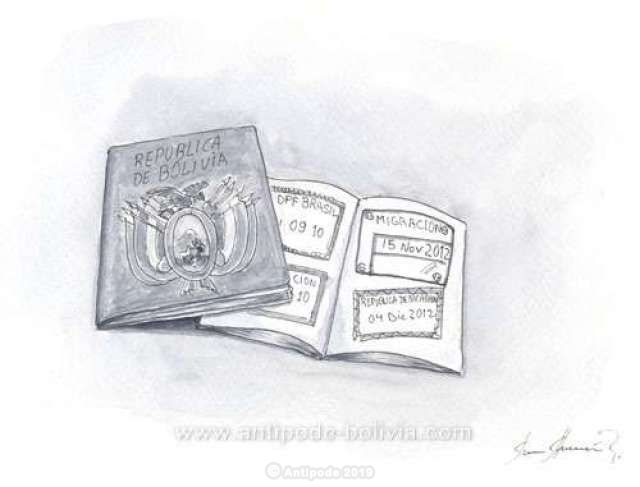

Entry formalities in Bolivia Visa and passport
For a tourist trip to Bolivia, citizens of the European Union, the United Kingdom, Switzerland, Canada and, since December 2025, the United States do not need a visa. You need a passport valid for at least 6 months from your date of entry and proof of onward travel. The authorised stay is 90 days. Here are the details, updated in November 2026.
Do I need a visa for Bolivia?
Not for a tourist stay of up to 90 days in any 12-month period if you hold a European, British, Swiss or Canadian passport. Since 1 December 2025, US citizens no longer need a visa either (it previously cost US$160). Other nationalities should check with a Bolivian embassy or consulate.
A visa is still required for stays over 90 days or for purposes other than tourism (work, study, volunteering). Apply at a Bolivian embassy or consulate before you travel.
Your passport
- Validity: at least 6 months from the date you enter Bolivia. Airlines check this at check-in.
- Blank pages: allow at least two for stamps, especially if you are combining Bolivia with Peru or Chile.
- Each child needs their own passport.
On arrival: the entry stamp
Since August 2022, the entry stamp counts as a 90-day permit, so there is no longer any need to extend it every 30 days. Check the date and length of stay on the stamp before leaving the desk.
At land borders, make sure you get an exit stamp from the neighbouring country and a Bolivian entry stamp. Some crossings, such as Hito Cajón (from San Pedro de Atacama) or the Lake Titicaca borders, are very low-key and it is easy to miss. Without an entry stamp, you will have to regularise your status on departure and pay a fine for each day. At La Quiaca – Villazón, the Argentine stamp also serves as the Bolivian entry stamp.
You may also be asked for proof of onward travel (return flight or onward ticket) and the address of your first accommodation.
Vaccinations and health
Yellow fever vaccination is strongly recommended if you are visiting the eastern and northern lowlands (the Amazon, the Santa Cruz region). It is compulsory if you enter Bolivia via the Brazilian Amazon border, and a certificate may be requested if you arrive from a country with a yellow fever risk. Get vaccinated at an approved centre at least 10 days before departure. It is not needed for the Altiplano alone (La Paz, Titicaca, Uyuni).
More advice (altitude, recommended vaccines, medical care) in our guide Health and travel in Bolivia.
Travel insurance
It is not compulsory, but we strongly recommend it. Make sure it covers medical costs and repatriation, including at high altitude: an evacuation from the South Lipez or the Amazon is very expensive.
Travelling with children
A minor who stays in Bolivia for more than 90 days and leaves with only one parent (or neither) needs a permit from a juvenile court judge. This does not apply to shorter tourist trips, but we recommend carrying a signed authorisation from the other parent if a child travels with only one parent. See also Can I travel with children in Bolivia?
Customs
- Cash: amounts above the customs threshold must be declared on entry and exit.
- Medicines: carry your prescription (with generic drug names). Medicines containing controlled substances require authorisation from the Bolivian Ministry of Health.
- Coca leaves: legal and widely used in Bolivia, but you may not take them home to Europe or North America.
Where to check before you go
Rules can change. Before departure, check your government's travel advice, for example GOV.UK: Bolivia entry requirements or the US State Department's Bolivia page. For a long-stay visa, study or work, contact the nearest Bolivian embassy or consulate.
Next steps: How to get to Bolivia and The right seasons for a trip to Bolivia.


